
Orienting yourself at the table
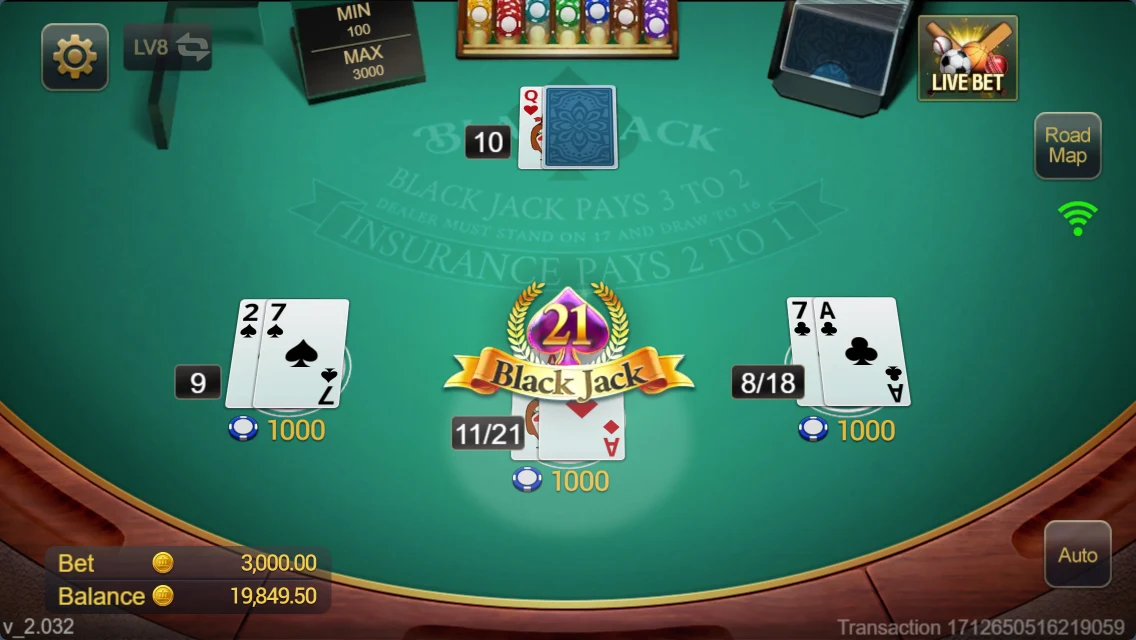
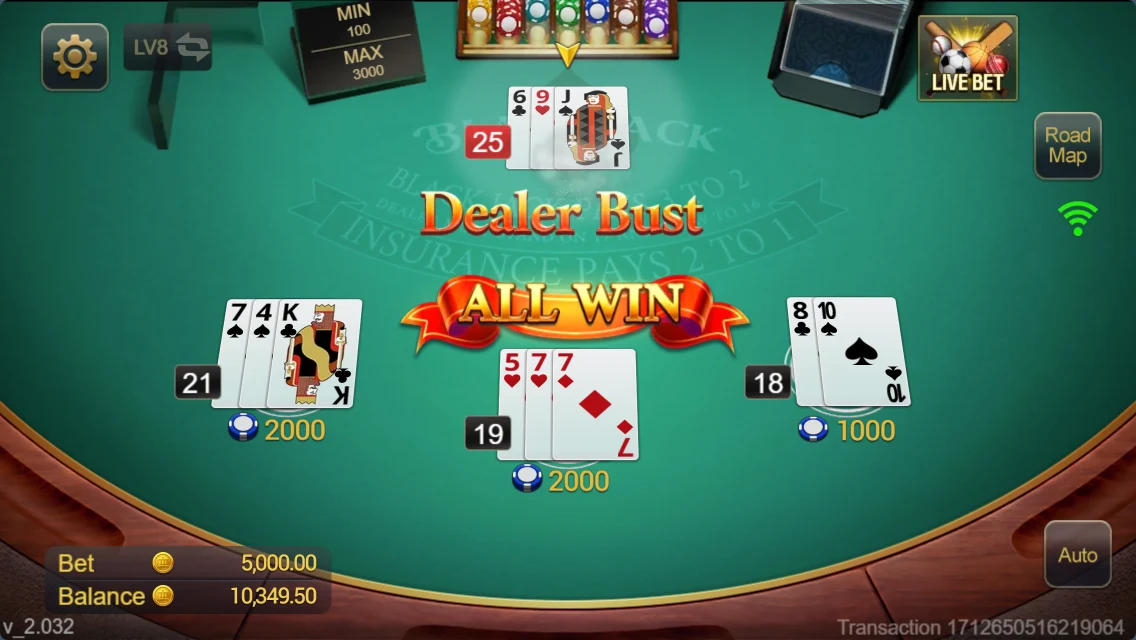
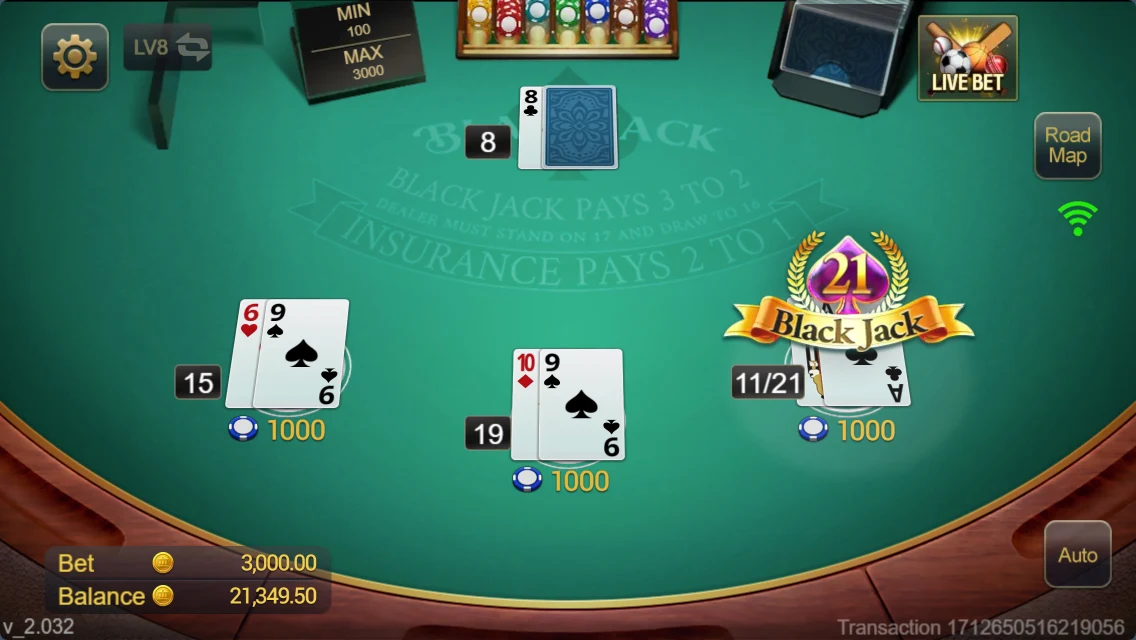
The dealer cards sit at the top of the green table, with three player positions arranged below. Each position has its own cards, total and chip display, while a combined Bet and Balance area appears at the lower left. The main record groups the game under Indian Poker, but the visible table and title identify blackjack. The catalog grouping is not a claim that poker hand rankings determine this game.
Why a blackjack badge differs from a total of 21
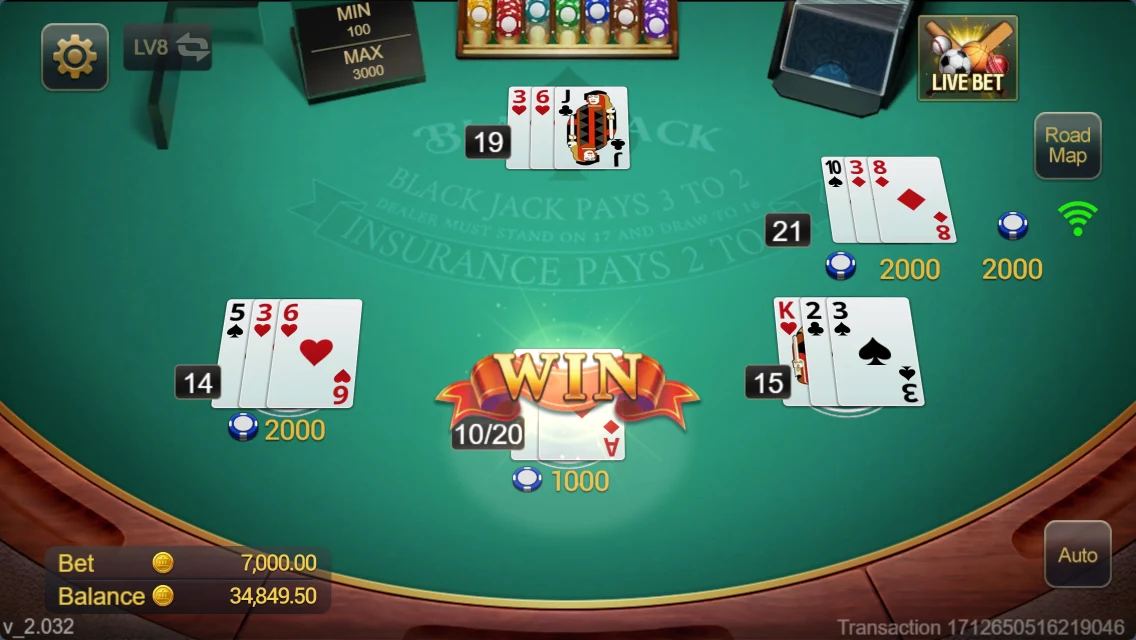
The first two images put a Black Jack badge over a two-card ace-and-ten-value hand. Another scene shows a three-card 21 beside a different result banner. The table itself states a 3-to-2 blackjack payout, consistent with the catalog feature text. This distinction matters when reading selected results: a total of 21 and the specifically labelled opening blackjack are not interchangeable visual states.
Examining the split prompt
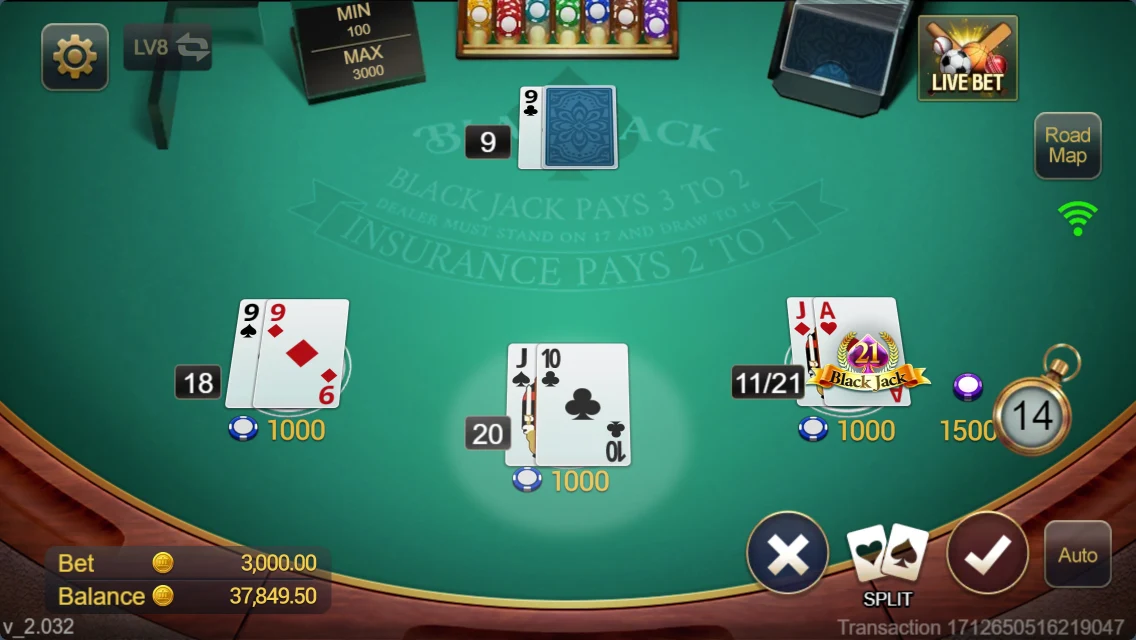
The fourth image shows a pair of nines at the left player position, alongside a SPLIT prompt with cancel and confirm controls at the bottom right. Other hands remain visible on the same screen. This is evidence that an action can concern one hand within a multi-hand round. It does not tell us whether every equal-value pair is splittable, how many splits are permitted, or which additional bets the configured table requires.
Dealer results and separate balances
In the third image the dealer total is 25 and a Dealer Bust banner appears above the player cards. In the fifth the dealer total is 19 and different player positions display different outcomes. The large banner is a result annotation, while the lower-left balance is an account display. Reading both as a single payout would erase the distinction between individual hands and the combined round.
Rules still needed for a full mathematical comparison
The table artwork includes dealer drawing and insurance wording, while the catalog lists splitting, doubling and insurance options. A full rule sheet would still be needed to establish deck count, soft-17 interpretation, resplitting and restrictions on doubling. Those details affect mathematical comparisons. This page therefore documents the interface and published payout label without assigning a house edge or claiming that any optional wager offers an advantage.
Image review and source
The 5 source-linked images below are retained as distinct files, with captions identifying their visible states. Open an image for the full-size labels. Catalog text and images were checked on 2026-10-13 against the linked JILI record. This is an editorial comparison of published material, not a hands-on play session, RNG audit or payout test. The sponsored Visit partner site link opens an external platform with separate availability and terms.
Blackjack FAQ
How many hands are shown in JILI Blackjack?
The catalog allows up to three hands in a round, and the images show three player positions below one dealer position. Split hands can create an additional arrangement within a position.
Where is the split action visible?
The fourth image shows the SPLIT prompt at the bottom right while a pair of nines is visible on the left. The complete restrictions are not supplied.
Does every 21 receive the blackjack payout?
The source specifically associates the 3:2 label with an opening blackjack. The gallery separately shows a three-card 21, so those result types should not be conflated.
Can I infer my table limits from these screenshots?
No. A minimum and maximum board belongs to the pictured build. Another operator or room may use different amounts, credits or limits.
Does this guide calculate a house edge?
No. The source lacks a complete version-specific rule sheet, including deck and action restrictions needed for a dependable calculation. This is an interface review.