
Reading the three composite images
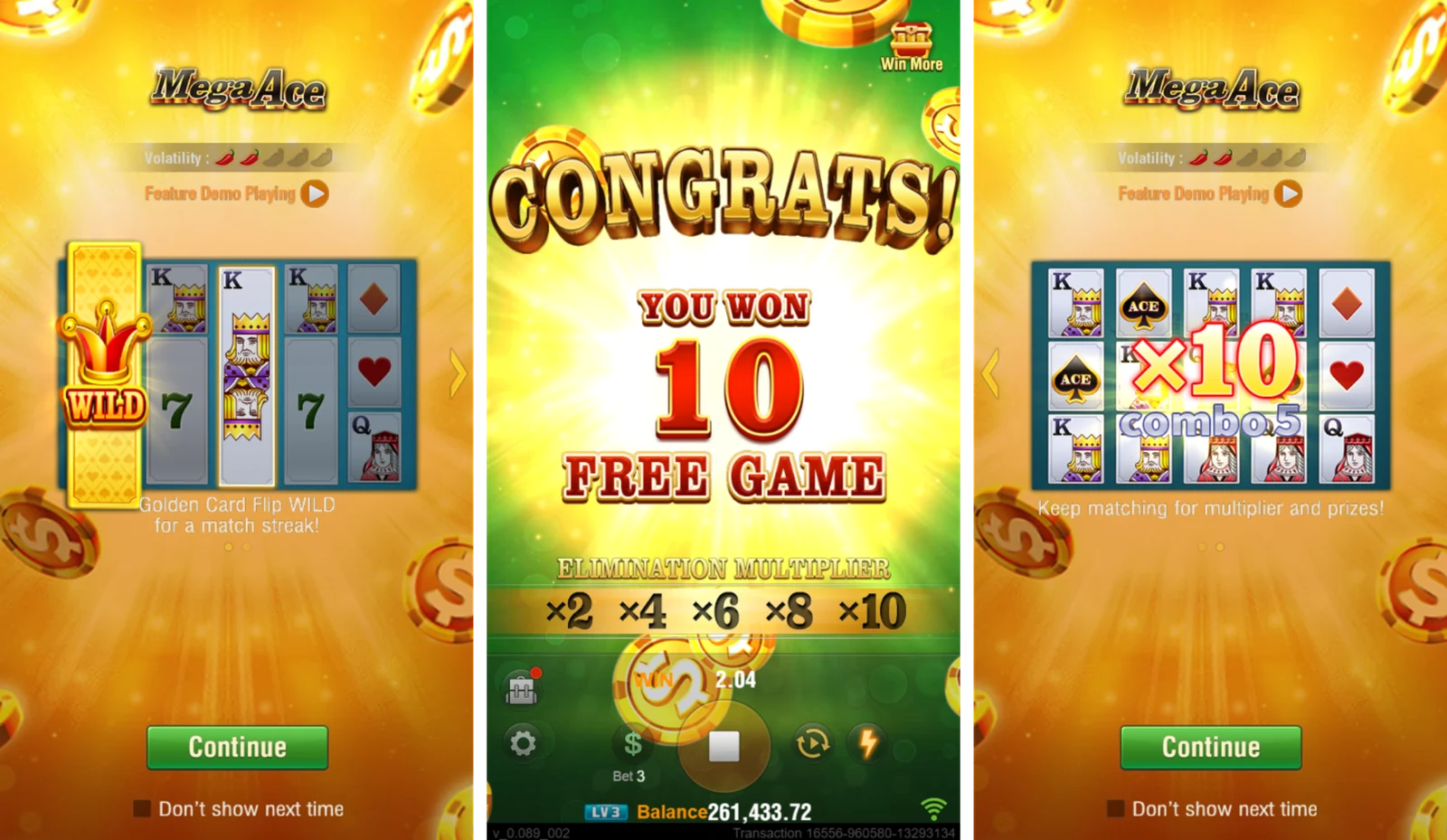
Each gallery file contains several portrait panels side by side. The first introduces features, the second shows golden cards and Wild changes, and the third illustrates a free-game award and result. They are supplied compositions, not three screenshots from a session we played. Open the full image when comparing small labels; a thumbnail hides the distinctions between a gold card background, a blue jester and a red crown.
The ways label changes between scenes
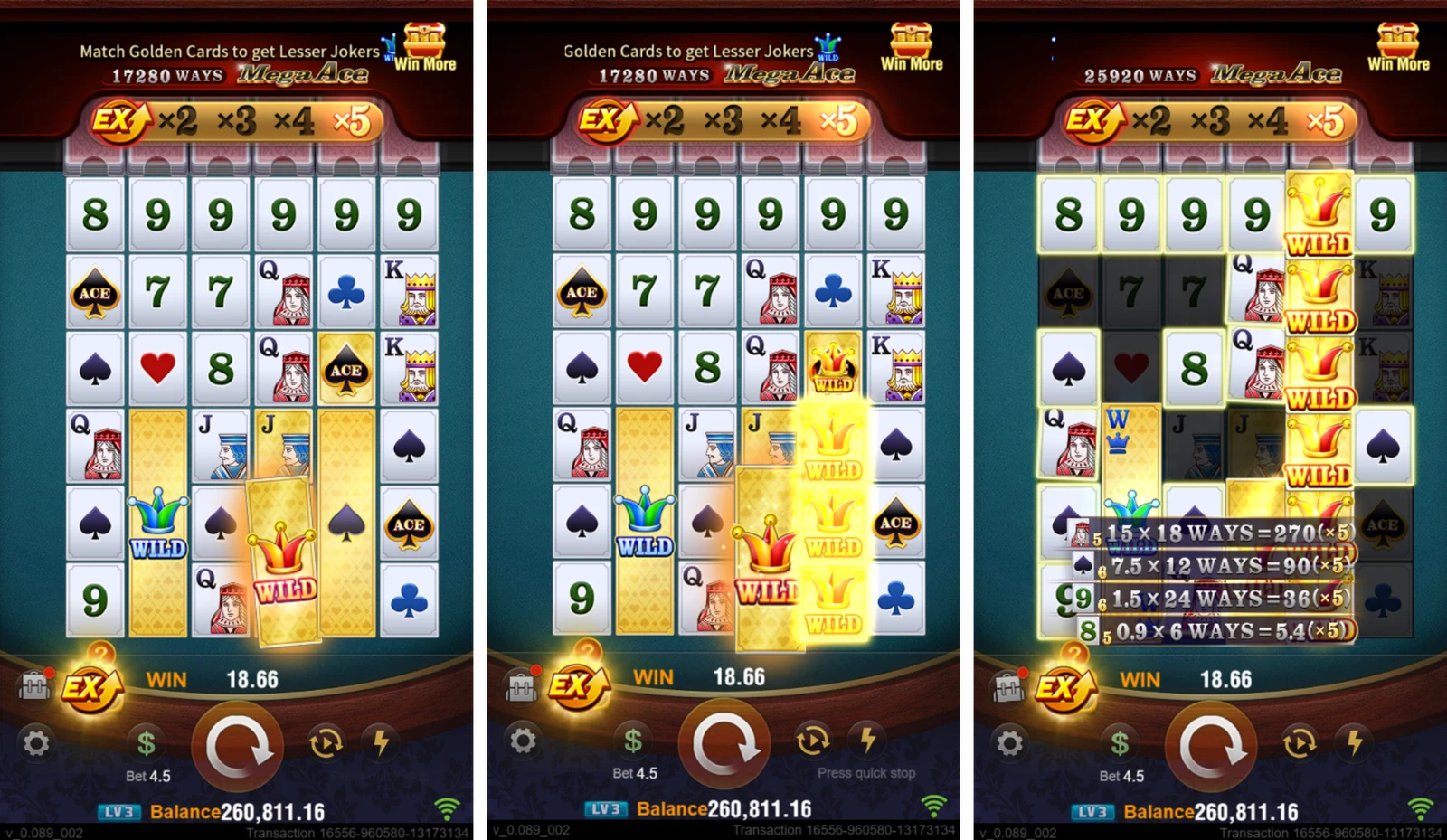
The catalog describes a six-by-six layout with up to 46,656 ways. In the middle composite, however, the top labels read 17,280 and 25,920 ways in different panels. Larger symbols occupy several vertical positions in some scenes. The useful distinction is between the catalog layout capacity and the count displayed for a particular board; the gallery does not justify calling every pictured board a fixed 46,656-way state.
Following the golden-card and Joker sequence
The central composite labels golden-card matches as a route to Lesser Jokers. A blue jester occupies a tall gold card in one panel; the next highlights red-crown Wilds, and the last shows a vertical run of crown symbols beside payout text. The publisher describes a progression from golden sets to smaller Jokers and a possible larger Joker. The supplied composition helps identify these states, but does not establish the probability of each transformation.
Two multiplier tracks, one important distinction
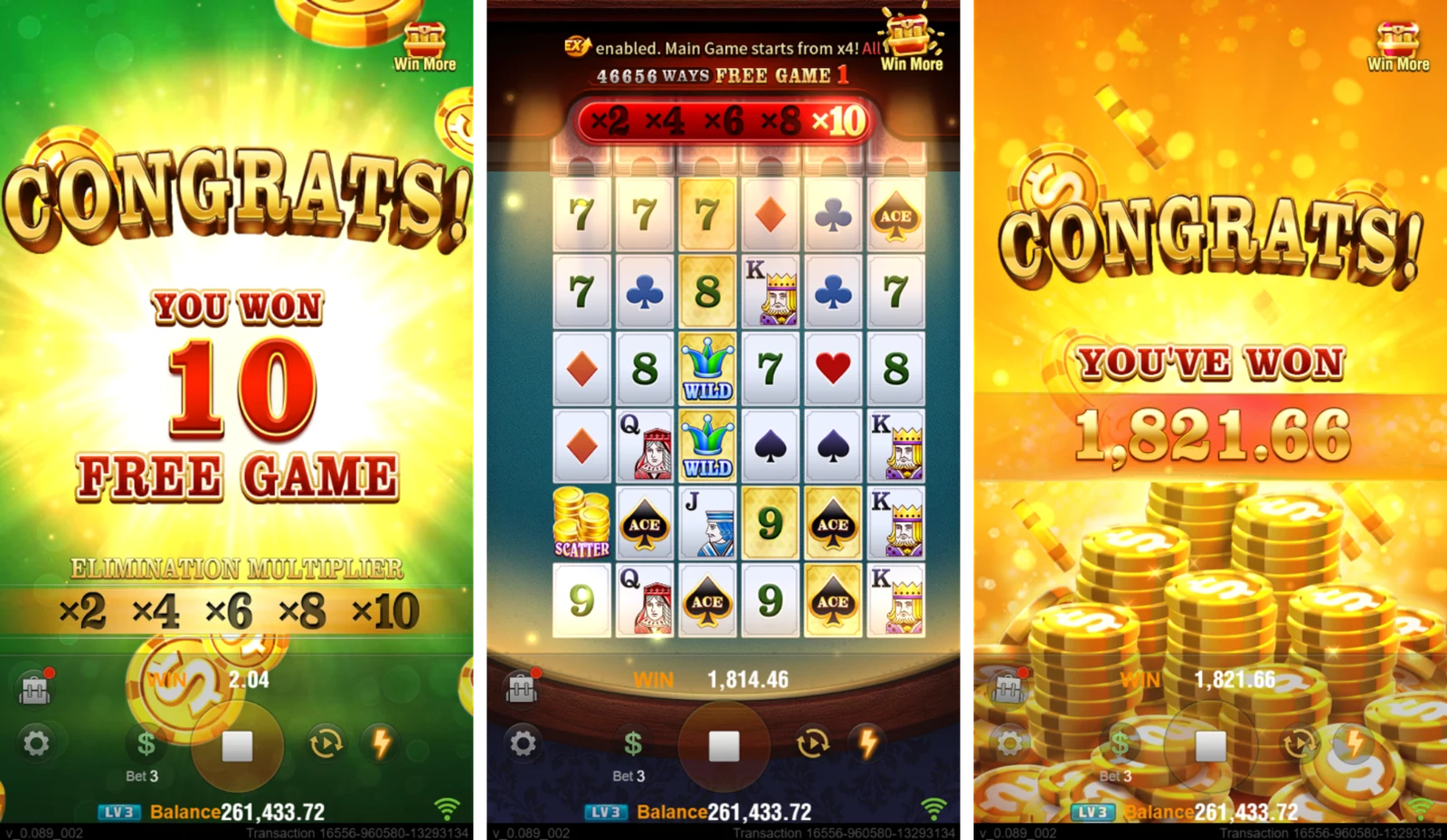
The published base-game track runs from 1x to 5x, while the free-game track uses 2x, 4x, 6x, 8x and 10x. The EX-marked base image highlights 5x at the right end; the free-game artwork displays its separate higher track. Extra Bet is described as changing the starting multiplier level. That optional setting has a cost context, so a larger multiplier label alone is insufficient to compare net returns.
Using the result panel correctly
The final composite includes an award panel, a reel state and a congratulatory total. These serve different purposes: the award identifies a mode, the reels show symbols, and the total records a selected example. The figure at the bottom labelled Balance is also distinct from WIN. No RTP, full symbol probabilities or complete Extra Bet price schedule accompanies these images, so the guide does not calculate expected returns from them.
Image review and source
The 3 source-linked images below are retained as distinct files, with captions identifying their visible states. Open an image for the full-size labels. Catalog text and images were checked on 2026-10-13 against the linked JILI record. This is an editorial comparison of published material, not a hands-on play session, RNG audit or payout test. The sponsored Visit partner site link opens an external platform with separate availability and terms.
Mega Ace FAQ
Does every Mega Ace screen show 46,656 ways?
No. That is the catalog layout figure, while supplied main-game panels display lower counts. Read the current ways label when comparing a captured board.
Why are there several screens in each image?
The publisher supplies composite images containing multiple portrait panels. They are retained intact so the labels and relationships in the source remain visible.
How can I distinguish the Joker states?
The middle composite uses a blue jester on a gold card and red-crown Wild symbols in later panels. These visual cues help separate the illustrated transformation states.
Do base and free games use the same multiplier track?
The catalog gives separate tracks: the base game reaches 5x and the free-game track reaches 10x. A track maximum is not a claim about the average result.
Has Extra Bet been tested for profitability?
No. This review compares published text and images. It does not include a played session, price comparison or probability model for Extra Bet.