
An unresolved difference in the source
The catalog specification says 520x, while its description refers to more than 1000x and a loading panel advertises rewards up to 1000 times. These statements may refer to different reward conditions or versions, but the source does not explain that. We therefore leave the headline maximum unconfirmed and retain this page under editorial review. The discrepancy is recorded rather than selecting the largest number.
Reading the two-dice table
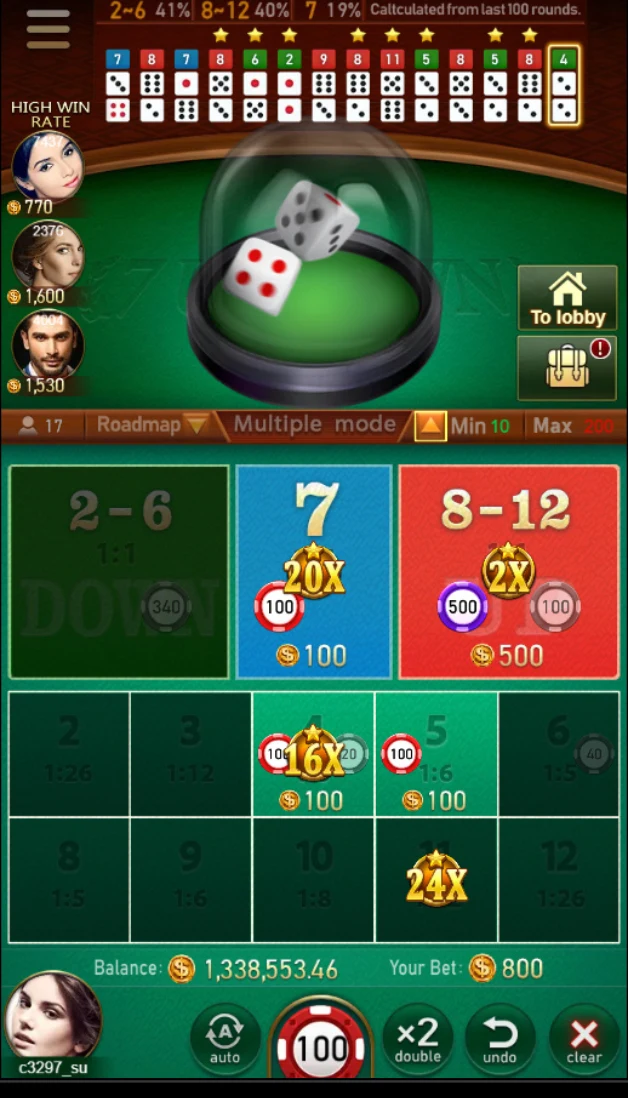
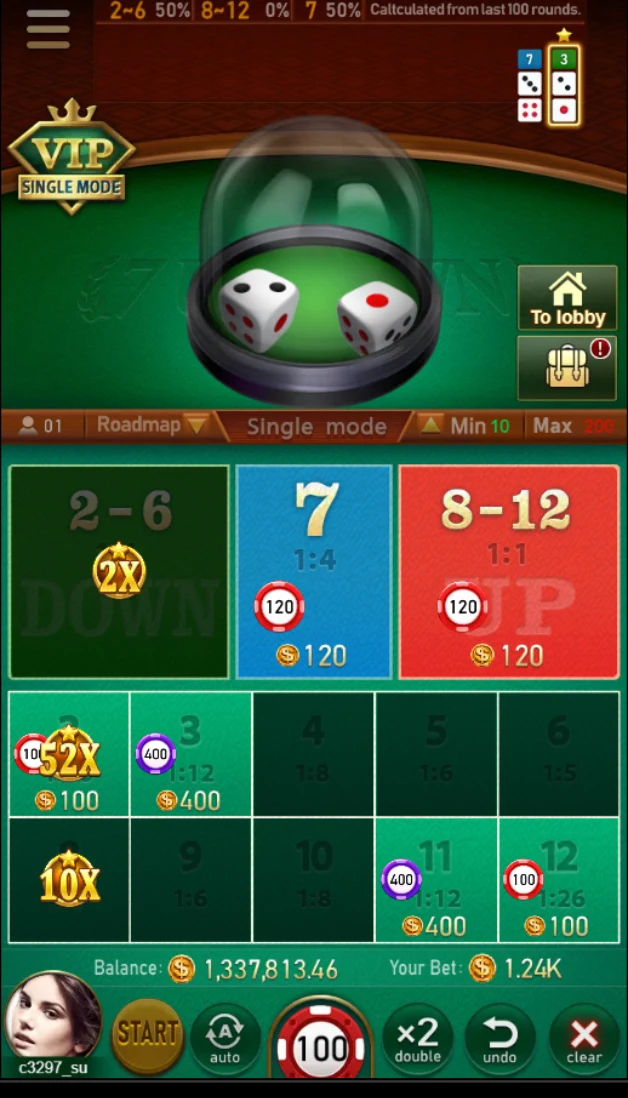
The two gameplay images show large areas labelled 2–6, 7 and 8–12 beneath a dice dome. Smaller cells sit below these areas, and a history grid appears above them. This distinguishes the game from a three-dice Sic Bo table. Additional cells and Extra Pay markers mean that the three main total ranges do not describe every available bet.
A mathematical reference, not the game payout model
For two independent fair six-sided dice there are 36 equally likely ordered outcomes. Totals below seven account for 15 outcomes, exactly seven for 6, and above seven for 15. Thus the three total groups would have probabilities 15/36, 6/36 and 15/36 under those assumptions. This calculation explains why three buttons need not represent equal chances; it neither verifies JILI's random process nor establishes the return of its Extra Pay bets.
Extra Pay and the history display
Different multiplier markers appear over individual table areas in the supplied images. Treat those as examples of displayed states, not permanent odds for every round. A historical result grid records past outcomes. It does not reveal the next dice result or establish that an underrepresented total is due. For settlement, the missing details are whether a quoted payout includes the stake, how bonus conditions apply and which table version is in use.
What would resolve the review
A version-specific rule sheet connecting the table's base payouts, Extra Pay feature and overall maximum would resolve the principal issue. The current entry names a Bonus Game but does not define its trigger or odds. Four distinct supplied images are available; the source also contains a placeholder that is excluded from this gallery.
Available source images
The gallery contains 4 distinct images linked by the catalog entry. Open each image to inspect its labels at full size.
- Loading panel advertising Extra Pay rewards up to 1000 times.
- Loading panel showing the two dice and the game title.
- Two-dice table with 2–6, 7 and 8–12 areas and Extra Pay markers.
- Another table state showing dice, total-range areas and a result history.
Review method
Catalog text and images were checked on 2026-10-13 against the JILI source linked below. This is an editorial comparison of published material, not a hands-on play session, RNG audit or payout test. The sponsored Visit partner site link opens an external platform whose availability and terms are separate from this guide.
7 up 7 down FAQ
How many dice does 7 up 7 down use?
The catalog description and gameplay images show two dice. The main table areas group totals into 2–6, exactly 7 and 8–12.
Is the maximum 520x or 1000x?
The source is inconsistent: its specification says 520x, while the description and loading artwork give different 1000x claims. A single verified maximum cannot be stated from this evidence.
Are the three main results equally likely?
For independent fair six-sided dice, the groups contain 15, 6 and 15 of 36 ordered outcomes. This mathematical illustration does not verify the game implementation or its payout table.
Does the history grid predict the next result?
The history grid shows previous results. It provides no evidence that a particular total is due or that the next round can be predicted.
Why is this page still under review?
The conflicting multiplier claims have not been reconciled with a version-specific rule sheet. Images and an expanded explanation are available, but the payout specification remains unresolved.